



Turpan, a major grape production base in China, is now the largest supplier of grape leaves for Palirria, world's No. 1 producer of Dolma, a traditional Greek cuisine.
URUMQI, Nov. 13 (Xinhua) -- Greek food company Palirria SA has purchased 3,700 tonnes of grape leaves this year from Turpan, a key hub along the ancient Silk Road in northwest China's Xinjiang Uygur Autonomous Region.
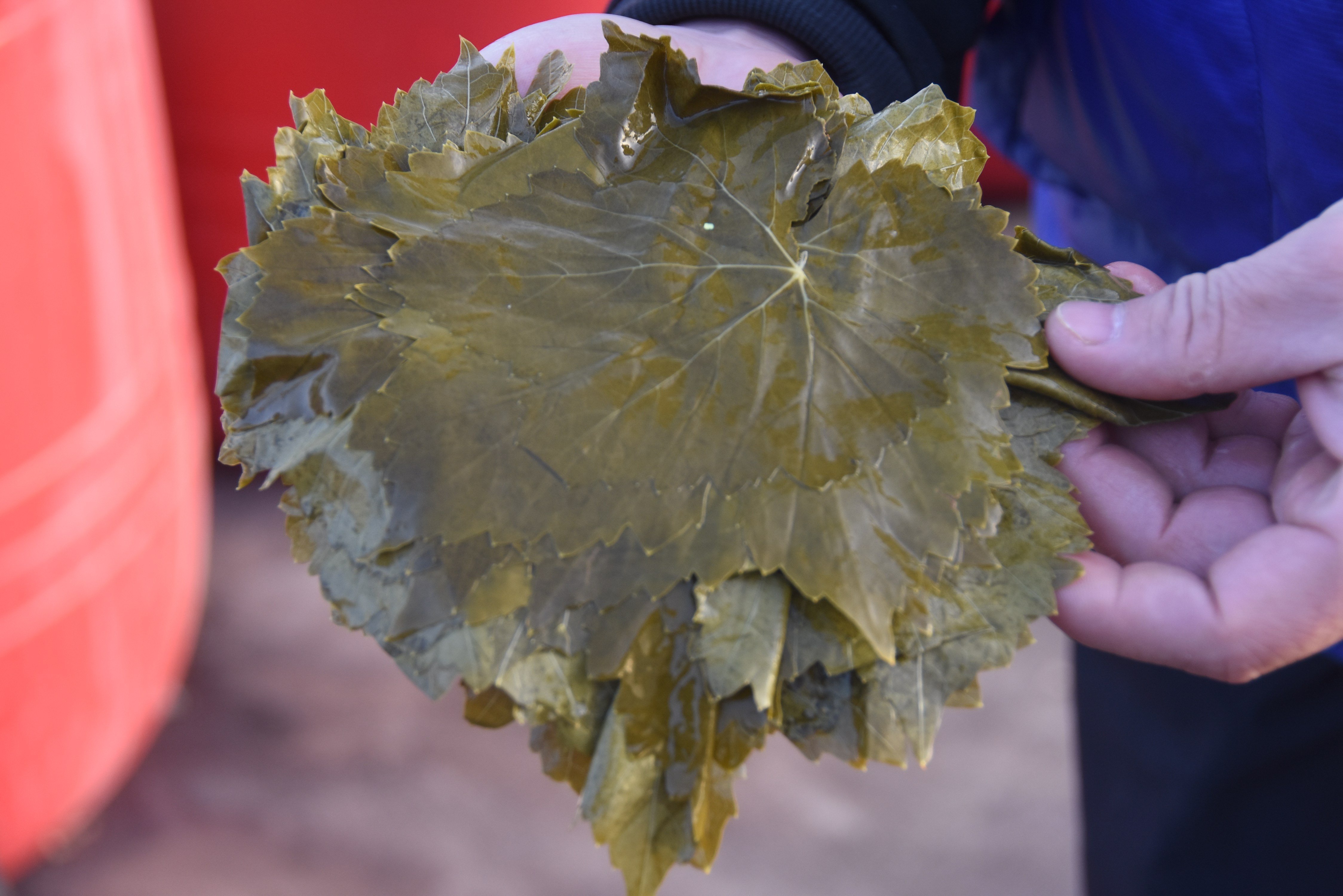
The processed grape leaves (Xinhua/Zhang Xiaolong)
Turpan, with its dry climate and abundant sunshine, has a long history of growing grapes and is one of the main grape production bases in China. Its planting area totaled 37,800 hectares with a yield of 1.14 million tonnes of grapes.
Customarily, local people in Turpan have their grapevines trimmed every day and use the grape leaves to feed their sheep, rather than themselves, according to Alim Bahayidin, a local village cadre.
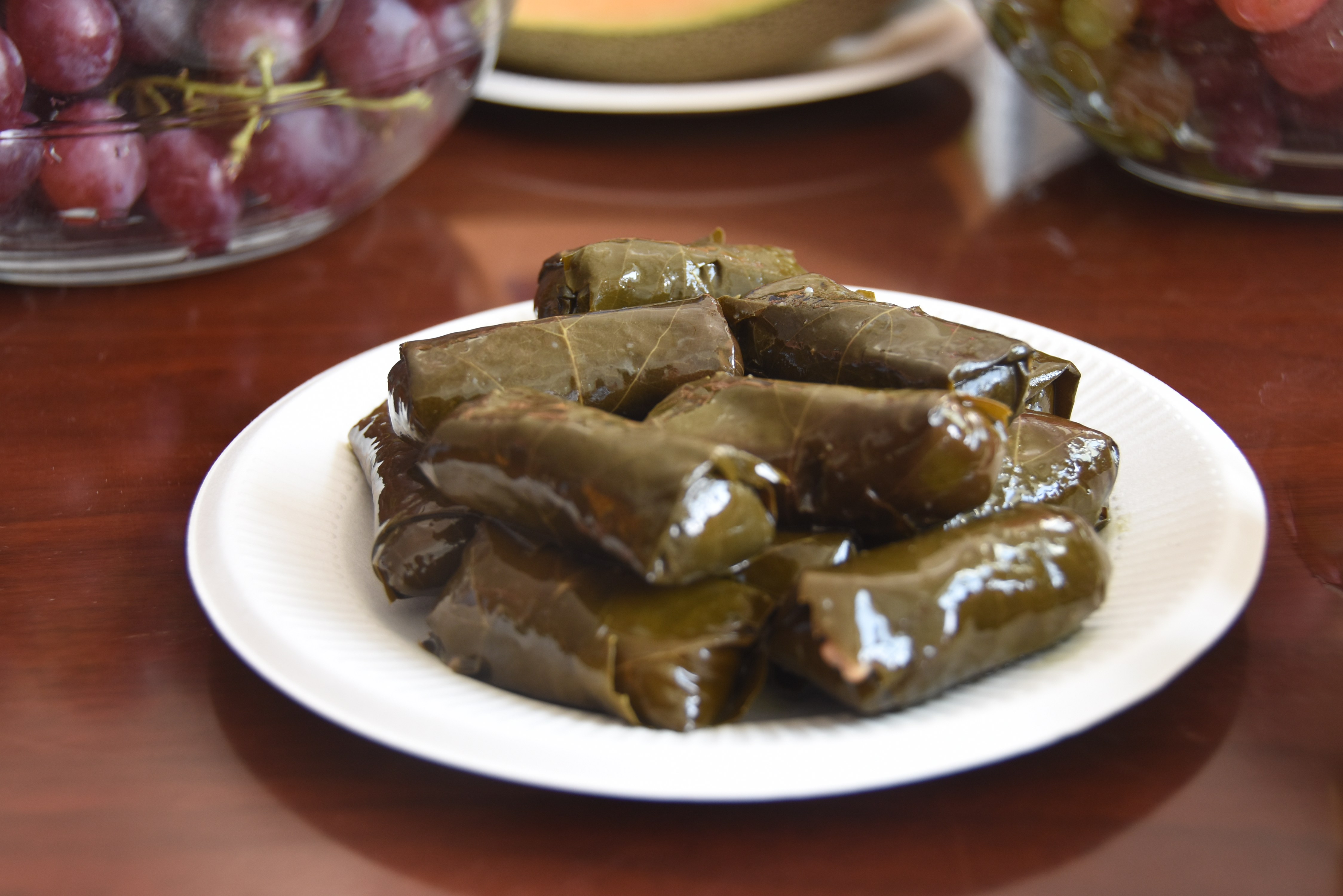
Dolma, a popular cuisine common in Mediterranean countries like Greece, Turkey and in surrounding regions (Xinhua/Zhang Xiaolong)
Yet the huge amount of grape leaves Palirria bought from Turpan have been sent to the company's processing plants worldwide to make its knockout product, dolma.
With a centuries-old history, dolma is a popular cuisine common in Mediterranean countries like Greece, Turkey and in surrounding regions.
Looking similar to zongzi, a traditional Chinese glutinous rice dumplings with various fillings wrapped in bamboo or reed leaves, dolma is also known as stuffed grape leaves.
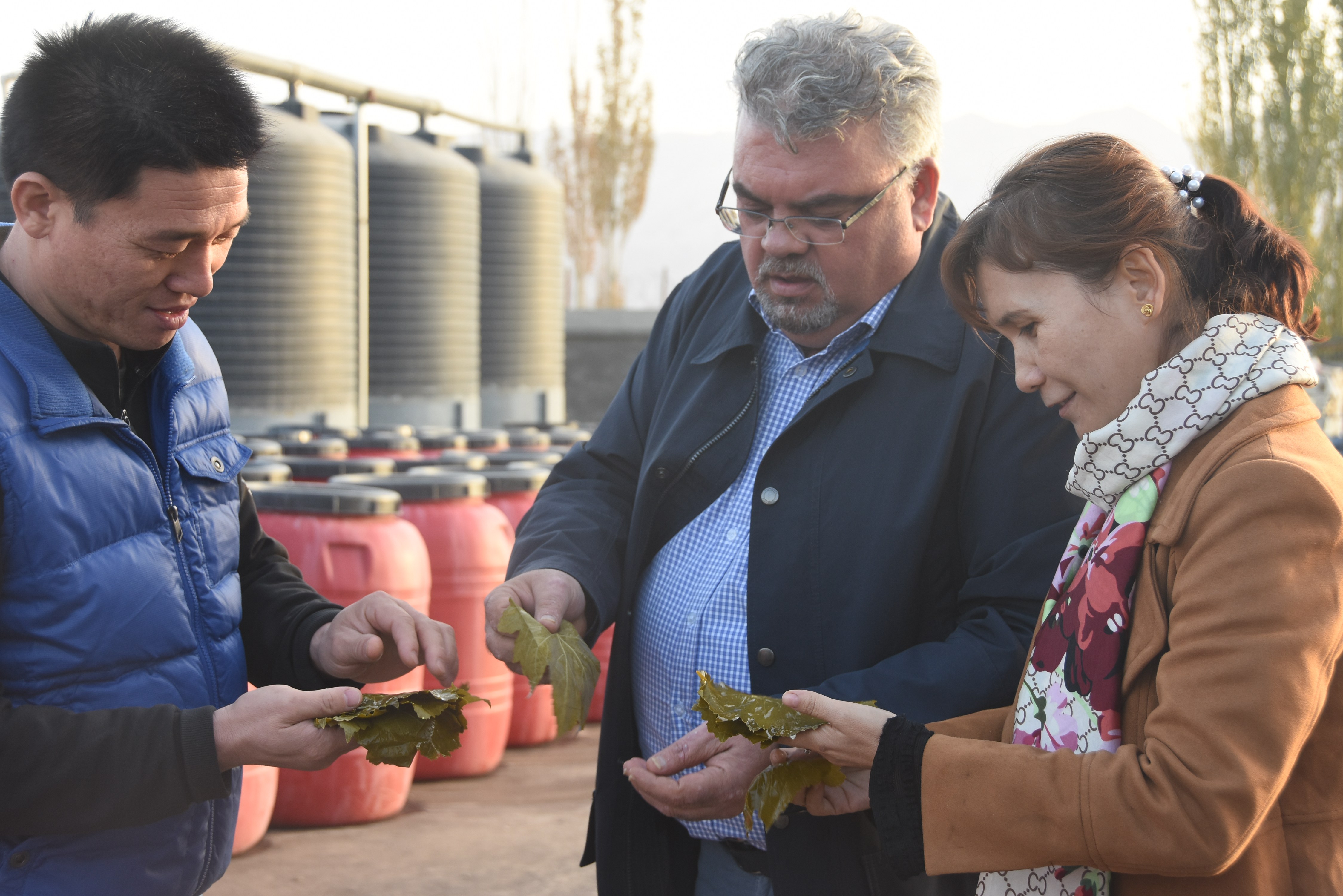
Georgios Intzes (M), general manager of Palirria's subsidiary Huangjinye in Xinjiang, and his Chinese colleagues examine grape leaves on Nov. 9, 2019. (Xinhua/Zhang Xiaolong)
"People don't strip off the grape leaves when they eat dolmades," said Georgios Intzes, general manager of Palirria's subsidiary named Huangjinye (meaning "golden leaves") in Xinjiang.
Thus the grape leaves suitable for making dolmades must have a good texture in the mouth, Intzes said. "They have to be tough, and not too thick."
Turpan grape leaves perfectly meet all the requirements. As prices increased in Greece, Palirria started searching for quality grape leaves in many viny regions in China in 1998, in a bid to meet the growing demand for grape leaves back in Europe.
Palirria identified Turpan as a source of supply in 2011 and bought 660 tonnes of grape leaves from the region in the same year through its locally-based subsidiary Huangjinye.
Today, Turpan has become the largest supplier for the 62-year-old Greek dolma producer, with average annual grape leaves sales hitting 3,000 tonnes in the past eight years, according to Zhou Changjiang with Huangjinye.
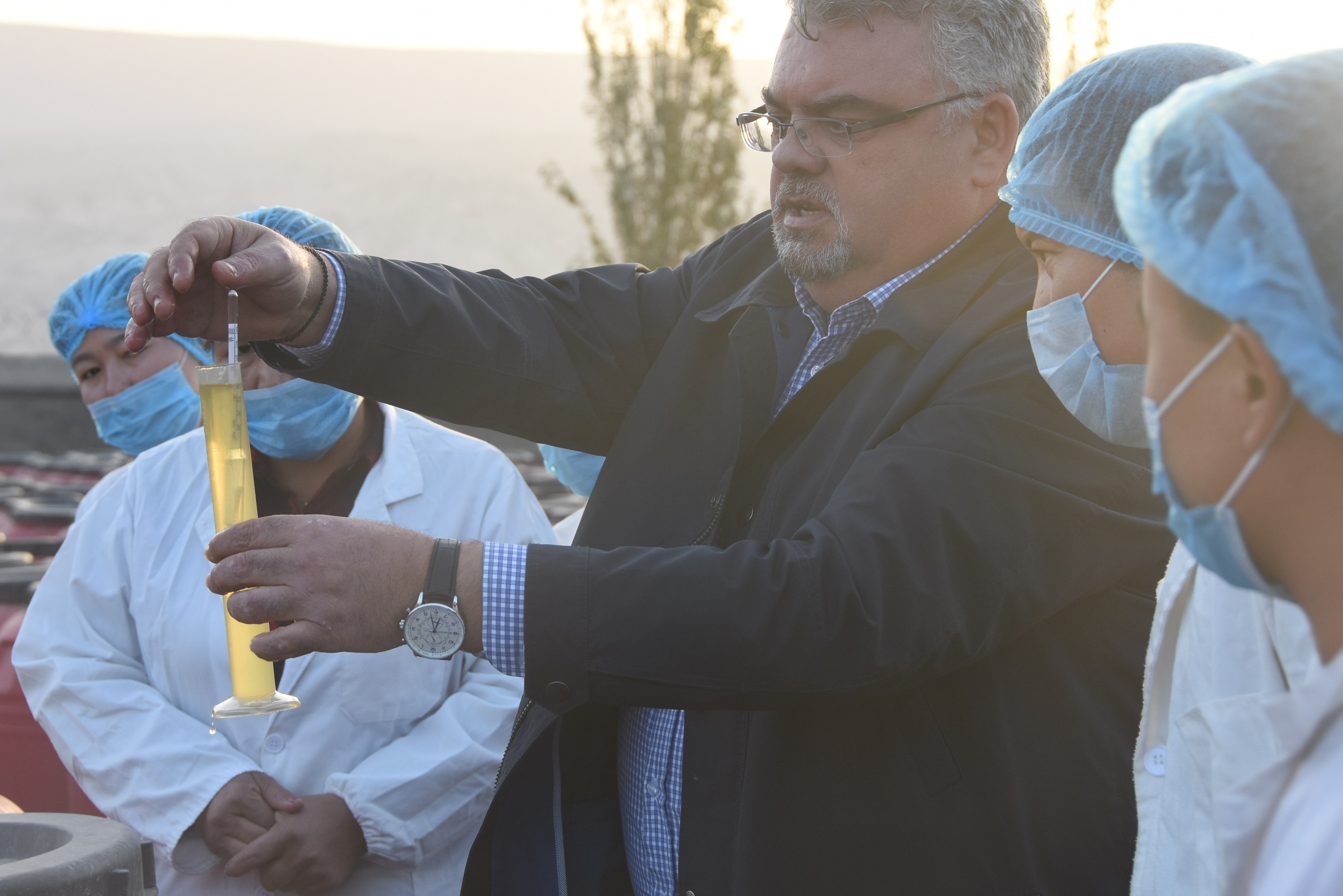
Georgios Intzes and Chinese workers examine the salt water used to preserve grape leaves on Oct. 28, 2019. (Xinhua/Zhang Xiaolong)
Zakiyagul Litip, another Chinese staff at Huangjinye, said each year from May to August, the company sets up 285 purchase spots in Turpan and collects grape leaves from local farmers every day before transporting them to the plants for preliminary processing.
"Roughly speaking, there are about 10,000 Turpan farmers who work with us every day, either directly or indirectly," Litip said.
The grape leaves business has also helped bulge the wallets of local vine growers, raising the annual per capita net income for rural residents in Bahayidin's village to 12,000 yuan (about 1,710 U.S. dollars) in 2018.
By selling the leaves to the Greek firm, farmers in Turpan now have an additional income stream. "The hard-working ones can earn more than 4,000 yuan in three months," Bahayidin said. ■
